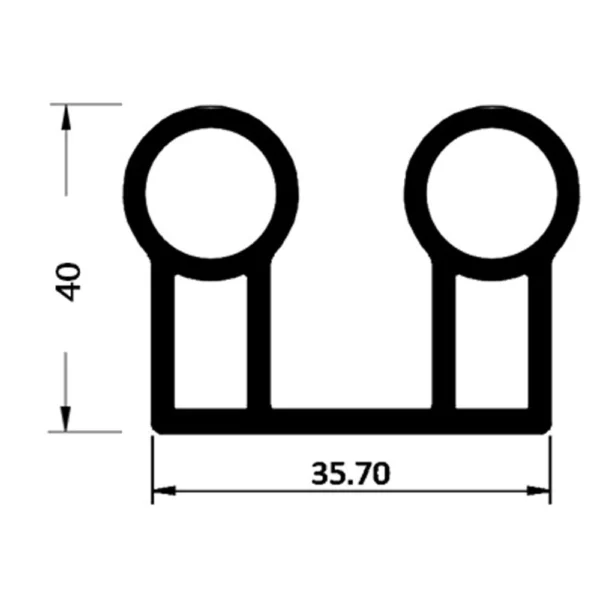
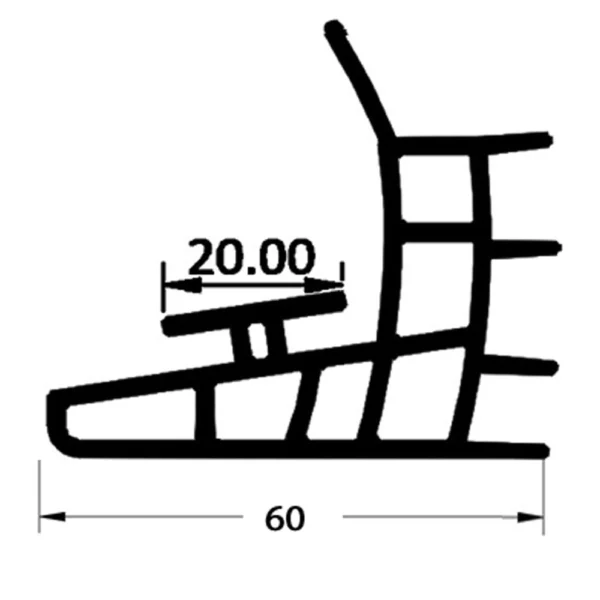
Description
Cold Room Door Rubber
Cold Room Door Epdm Rubbers
Importance of Door Rubber in Cold Storage Applications
Cold room doors are exposed to continuous mechanical movement. Each opening and closing cycle compresses the door rubber, requiring it to return to its original shape immediately after the door closes. If the rubber loses elasticity or sealing pressure, the following problems may occur:
- Cold air leakage from the cold room
- Warm and humid air entering the storage area
- Condensation and icing around the door perimeter
- Increased workload on refrigeration systems
- Higher operational and energy costs
The Cold Room Door Rubber (BOB-K23) is designed to withstand repeated compression cycles while maintaining consistent sealing performance over long periods of use.
EPDM Material Properties and Advantages
BOB-K23 is manufactured from EPDM (Ethylene Propylene Diene Monomer), one of the most widely used rubber materials in cold storage sealing systems. EPDM is especially suitable for cold room doors due to its physical and chemical properties.
Key advantages of EPDM include:
- Excellent elasticity across a wide temperature range
- Resistance to low temperatures without hardening
- High durability against moisture and condensation
- Resistance to aging, deformation, and cracking
- Long service life under intensive use
Thanks to these properties, EPDM door rubbers remain functional and reliable even in demanding cold room conditions.
Co-Ex Structure: Two Functions in One Profile
The Cold Room Door Rubber (BOB-K23) features a co-extruded (co-ex) structure, meaning that two different EPDM hardness levels are combined within a single rubber profile. This design allows the rubber to perform two critical functions simultaneously.
The co-ex structure consists of:
- Solid EPDM section inserted into the aluminum door leaf profile
- Sponge EPDM section that compresses against the door frame
This dual-material construction ensures both secure fixation and superior sealing performance.
Solid EPDM Base for Secure Fixation
The part of the rubber that fits into the aluminum door leaf profile is made of solid EPDM. This section is responsible for holding the rubber firmly inside the aluminum channel.
Benefits of the solid EPDM base include:
- Strong mechanical grip inside the aluminum profile
- Prevention of rubber loosening during door operation
- High resistance to vibration and repeated movement
- Reduced maintenance and replacement needs
This ensures that the door rubber remains properly positioned throughout its service life.
Arrow-Shaped Base Geometry for Easy Installation
BOB-K23 Cold Room Door Rubber is designed with an arrow-shaped base geometry. This structure allows the rubber to be installed by pressing or lightly tapping it into the aluminum profile from above.
Advantages of the arrow-shaped base include:
- Fast and effortless installation
- No need for adhesives or additional fixing elements
- Secure locking inside the aluminum channel
- Easy removal and replacement during service operations
Compared to T-shaped base designs, arrow-shaped rubbers are particularly preferred for maintenance purposes due to their ease of installation.
Sponge EPDM Section for Maximum Sealing
The section of the rubber that contacts the door frame is made of sponge EPDM. This softer structure compresses easily when the door closes, allowing it to adapt to surface tolerances.
This results in:
- Uniform sealing pressure along the entire door perimeter
- Effective air and vapor tightness
- Prevention of moisture ingress
- Improved insulation performance
The sponge EPDM section ensures consistent sealing even if minor misalignments occur between the door leaf and the frame.
Application in Cold Room Hinged Doors
The Cold Room Door Rubber (BOB-K23) is specifically designed for cold room hinged doors. Hinged door systems require balanced compression and continuous sealing around the entire door perimeter.
BOB-K23 provides:
- Even sealing pressure on all sides of the door
- Stable performance during frequent door operation
- Reliable insulation in industrial cold storage facilities
Typical application areas include food storage rooms, refrigerated warehouses, and frozen storage environments.
Contribution to Energy Efficiency
Door rubbers directly affect the energy performance of cold rooms. BOB-K23 Cold Room Door Rubber helps:
- Reduce cold air leakage
- Stabilize internal cold room temperature
- Lower refrigeration system workload
- Decrease overall energy consumption
By maintaining effective sealing, the rubber supports long-term energy savings and system efficiency.
Technical Specifications
- Product Name: Cold Room Door Rubber
- Manufacturer: Bob Modüler
- Product Code: BOB-K23
- Material: EPDM
- Structure: Co-ex (solid EPDM + sponge EPDM)
- Base Geometry: Arrow-shaped base
- Application: Cold room hinged doors
Conclusion
Cold Room Door Rubber (BOB-K23) is a professional sealing solution designed for cold room hinged doors. With its EPDM co-ex structure, arrow-shaped base geometry, and long-lasting elasticity, it provides easy installation, secure fixation, and excellent sealing performance. Suitable for intensive cold storage applications, BOB-K23 ensures reliable insulation, reduced energy loss, and long service life. It is an ideal choice for manufacturers and installers seeking dependable door sealing in cold storage systems.