


Showing all 6 results
-

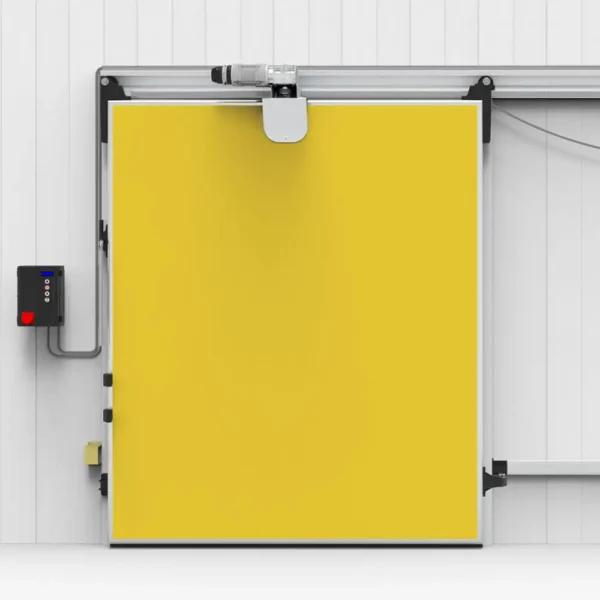
Automatic Sliding Door – BOB-OSK100
Read more -
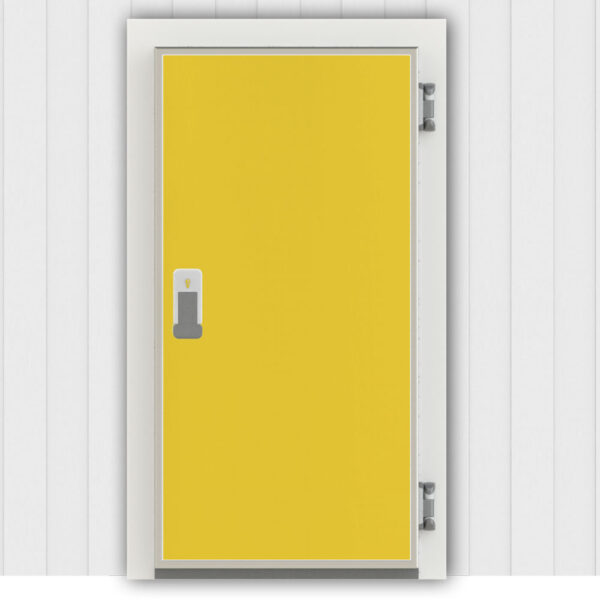
Cold Room Hinged Door – BOB-MK100
Read more -
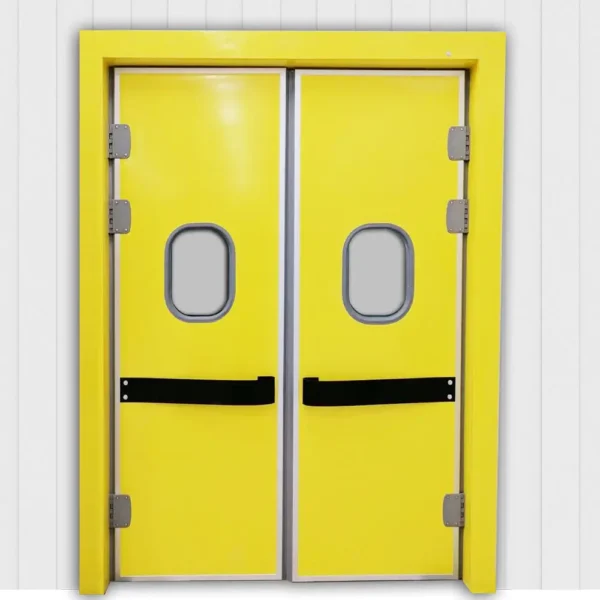
Flip-Flap Door – BOB-FFK100
Read more -
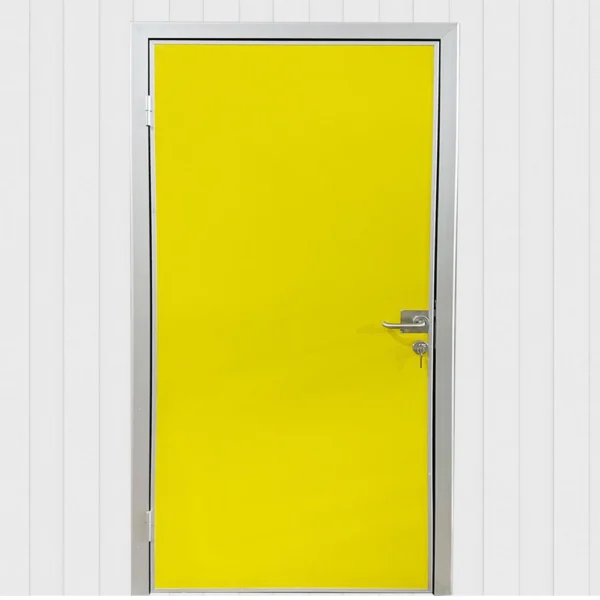
Service Door (Office Door) – BOB-SK100
Read more -
Sliding Door – BOB-SK200
Read more -
Sliding Monorail Door – BOB-SMK300
Read more
Cold Room Doors
One of the key points in cold chain management is that the door must not allow heat transfer. At this point, cold room doors are much more than just an entrance door to the storage area. A cold room door traps the cold air inside for products that must be stored under sensitive conditions. These doors, which prevent outdoor air and humidity from entering the interior by 100%, effectively act as an insulation shield.
Cold room doors are designed in line with industrial refrigeration needs. Accordingly, they contain polyurethane filling material with a density of 42. Polyurethane-filled doors, which we can describe as the heart of insulation, provide maximum thermal insulation. In this context, they increase the energy efficiency of businesses and are used in various sectors. Among these are meat processing plants, pharmaceutical warehouses, restaurants and logistics centers.
Types of Cold Room Doors by Area of Use
Cold room doors are manufactured according to the size of the storage area, the type of products to be stored and the customer’s needs. The most commonly used cold room door types today are as follows:
- Hinged
- Flip-Flap
- Automatic Sliding
- Service Door
- Sliding
In addition to the above, the monorail system also stands out as an important option for storage areas.
Cold Room Sliding Doors
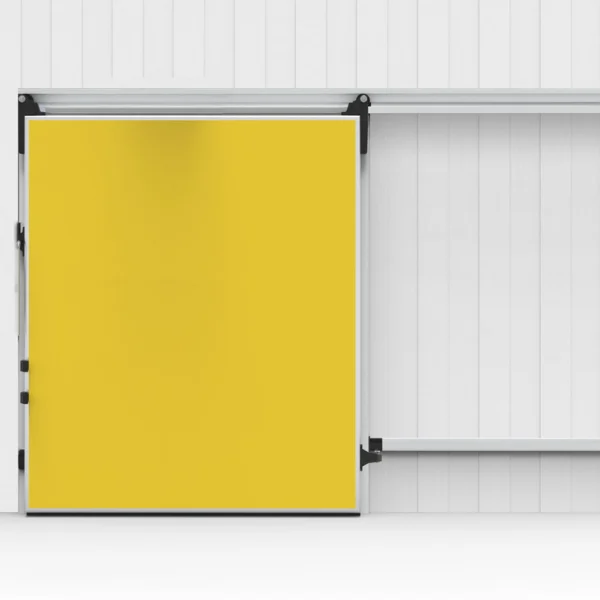
Cold room sliding doors save a significant amount of space thanks to their lateral opening movement. These doors, which stand out with their wide clear opening, are ideal especially for warehouses where forklifts and pallet trucks are used. Depending on the requirement, there are two types: manual and automatic. Among these, automatic sliding doors allow operations to be completed quickly in areas with heavy traffic. Despite their automatic operation, the motor mechanism is highly powerful. The automatic sliding cold room door, which has a quiet operating mechanism, offers maximum airtightness.
The Standard Sliding Door, as an alternative solution, meets the insulation needs of professional storage areas while offering the flexibility of manual operation. Developed with strong engineering details, this series has high thermal insulation performance. Depending on ambient conditions and budget, models produced entirely from PVC profiles or from aluminum profiles that prevent thermal bridging can be preferred.
Cold Room Hinged Doors
Hinged systems are a suitable option for areas with heavy personnel traffic. They are a standard solution for medium and small-sized storage areas where forklift entry is not required. Their circular opening principle is one of the first features that comes to mind when talking about hinged cold room doors.
A hinged cold room door is ideal for hotel kitchens, restaurants, laboratories and medical warehouses. Depending on the need, there are two options: single-leaf and double-leaf. Systems that apply full pressure to the frame when closing guarantee air tightness. In addition, the system manufactured with lift-off hinge technology ensures that the gaskets sit perfectly on both the floor and the frame.
Flip-Flap Doors
Flip-flap doors are a solution that can open 180 degrees, designed for areas where in-house logistics must flow quickly. Also known as bar-type doors, these structures minimize air transfer between spaces. They also divide areas, allowing a specific cold room to be used more efficiently. Flip-flap cold room doors with a spring hinge system return to the central position after passage. In addition, their impact-resistant surface offers fast and safe operation.
Monorail Pass-Through Doors
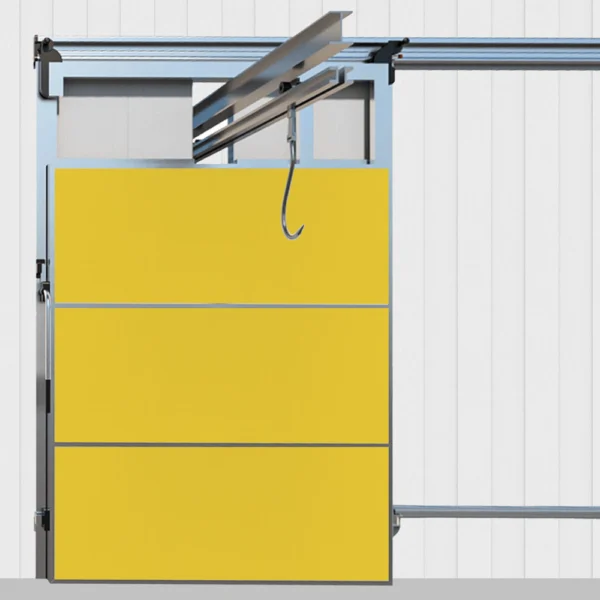
Monorail pass-through door systems are specially designed for meat processing plants, slaughterhouses and carcass meat storage rooms. They enable operational processes on the production line to continue without interruption. There is a ceiling-mounted rail line carrying the carcass meat. At the very top of the door leaf, there is a notch. This notch grips the rail line. When the door is closed, a special gasket system is activated. In this way, full insulation performance is achieved for the storage area and the cold chain of the meat is preserved during entry and exit from the cold room.
What Are the Features of Cold Storage Room Doors?
Material quality and safety details are extremely important in the design of an industrial cold room door. Cold room doors consist of polyurethane-filled panels injected at high pressure between two steel sheets. Polyurethane with a density of 40–42 kg/m³ is recognized worldwide as one of the best thermal insulation materials. The foam core increases the structural strength of the panel and creates a strong barrier that prevents heat transfer.
PVC and anodized aluminum profiles that prevent thermal bridging are among the prominent features of these doors. PVC and anodized aluminum profiles prevent condensation from forming on the door surfaces. In this way, energy loss is prevented and overall energy efficiency is improved.
Other important features regarding cold room doors are as follows:
- It is possible to integrate heated doors (with resistances) into the frame and leaf profiles. In this context, concealed heaters slightly warm the surface and prevent icing.
- The flexible EPDM gasket system reduces air permeability to zero. When the door is closed, the gaskets apply full pressure on the frame, preventing warm air and humidity from entering from outside.
- An internal safety handle that can always be opened from inside maximizes personnel safety. Thanks to its phosphorescent structure, the handle glows in the dark and, when pushed, disables the locking mechanism, allowing the door to open.
In addition to the above, it is possible to manufacture the door surface from different materials in accordance with food regulations and safety standards.
The Importance of Choosing the Right Door for Cold Rooms
Cold storage rooms represent a significant cost item for businesses. No warm air should enter the space where the refrigeration units are working to maintain the desired temperature. Every pocket of warm air leaking through the door causes the system to consume extra electricity. At this point, choosing a poor-quality or unsuitable cold room door leads to energy loss.
When choosing a cold room door, it is essential to consider options that provide perfect airtightness and appropriate insulation values. At the same time, operational speed should be taken into account. Moreover, the right door choice is also crucial for maintaining product quality. An ideal cold storage door prevents temperature fluctuations. In this way, the quality and freshness of food products are preserved.
What Determines Cold Room Door Prices?
Industrial cold room door prices vary depending on the technical requirements and scale of the project. Door dimensions are another important factor that determines cost. For example, the material consumption and price of doors designed only for pedestrian traffic differ from those designed for forklift access. Automation level also directly affects the price. In this respect, manual sliding doors stand out as an economical solution, whereas motorized, sensor-operated and remote-controlled automatic sliding cold room doors are a more costly option.
Another factor that determines the price of a cold storage door is the surface cladding material. Polyester-coated steel doors are popular solutions with a strong price–performance balance. Stainless steel doors with chrome surfaces, on the other hand, have higher raw material costs. In addition, panel thickness affects production costs and thus the pricing of cold room doors. Extra features such as viewing windows, impact protection kick plates and coded access systems also influence the final price.
Frequently Asked Questions (FAQ)
Why Are Heating Resistors Needed in a Cold Room Door?
The resistance (heater) system slightly warms the contact surface, preventing icing. This avoids the formation of moisture and ice between the door gaskets and the frame. At the same time, it ensures that the door can always be opened easily and that the gaskets do not tear.
What Happens If Someone Is Locked Inside While the Door Is Locked?
In accordance with occupational safety standards, all our industrial cold room doors are equipped with an internal emergency handle (panic bar) as standard. Even if the door is locked from the outside, personnel inside can push this handle, disable the locking mechanism and exit. Thanks to its phosphorescent structure, it can be easily seen even in the dark or during a power outage.
Can an Automatic Sliding Door Be Installed Later in My Existing Storage Room?
Yes, you can later replace the existing door in your storage room. For this, it is sufficient to have a suitable wall opening and mounting area.
What Is a Monorail Door and In Which Facilities Is It Used?
It is designed for meat processing plants and slaughterhouses where there is an overhead rail (monorail) transport system. There is a special notch (opening) at the top of the door to allow the rail line to pass through. Thanks to this design, carcass meat can be brought into the storage room without being removed from the rail, the line continues uninterrupted, and full insulation is maintained when the door is closed.
Can Door Gaskets Be Replaced?
The EPDM gaskets that ensure door tightness are designed to be easily removed and replaced. Regularly inspecting the gaskets and renewing them when necessary is very important for maintaining continuous energy savings.