Description
Cold Room Door Leaf Sheet U Rubber
Why Preventing Heat Transfer in Cold Room Doors Is Critical
Cold room doors represent one of the most vulnerable points in any cold storage system. Any thermal bridge formed inside the door leaf can result in:
- Cold air loss
- Condensation and surface sweating
- Ice formation around the door
- Increased energy consumption and system load
Direct contact between aluminum profiles and metal sheets significantly accelerates heat transfer. The BOB-P571 cold room door leaf u rubber eliminates this contact point, dramatically improving the thermal performance of the door leaf and supporting stable cold room conditions.
Wide Compatibility with Multiple Cold Room Door Types
The cold room door leaf u rubber is designed for use across a wide range of cold room door configurations. It is commonly applied in the following door types:
- Cold Room Hinged Doors
- Cold Room Sliding Doors
- Cold Room Sliding Monorail Doors
- Cold Room Automatic Sliding Doors
In all these systems, door leaves are constructed using anodized aluminum profiles and metal sheets. The u rubber functions as a standard insulating element within the door leaf assembly.
Critical Interface Between Aluminum Profiles and Metal Sheets
Cold room door leaves are typically composed of:
- Metal sheets on the inner and outer surfaces
- Anodized aluminum door leaf profiles around the perimeter
When these two materials are in direct contact, thermal conductivity increases sharply. The BOB-P571 cold room door leaf u rubber is precisely positioned at this interface.
The u rubber:
- Breaks the direct connection between aluminum and metal
- Creates an insulating barrier
- Prevents thermal bridges inside the door leaf
As a result, the door leaf achieves not only mechanical integrity but also optimized thermal insulation performance.
Standard Aluminum Profile Codes Where the U Rubber Is Used
The cold room door leaf u rubber (BOB-P571) is used as a standard component in the following cold room door leaf aluminum profiles manufactured and widely applied in the industry:
- BOB-7006D
- BOB-7006C
- BOB-30561
- BOB-30557
- BOB-12865
Although these profiles are designed for different door types and thicknesses, they all share a common requirement for u rubber insulation, making BOB-P571 an indispensable component in cold room door manufacturing.
Primary Function: Interrupting Aluminum-to-Metal Contact
The main and most critical purpose of the BOB-P571 cold room door leaf u rubber is:
👉 To eliminate the direct connection between the aluminum profile and the metal sheet forming the door leaf
By fulfilling this function, the product:
- Minimizes heat transfer
- Reduces condensation on door surfaces
- Ensures balanced temperature distribution within the door leaf
- Enhances the overall performance of cold room doors
This is especially important in high-traffic cold storage doors subjected to frequent opening and closing.
Also Known as U Sheet Rubber
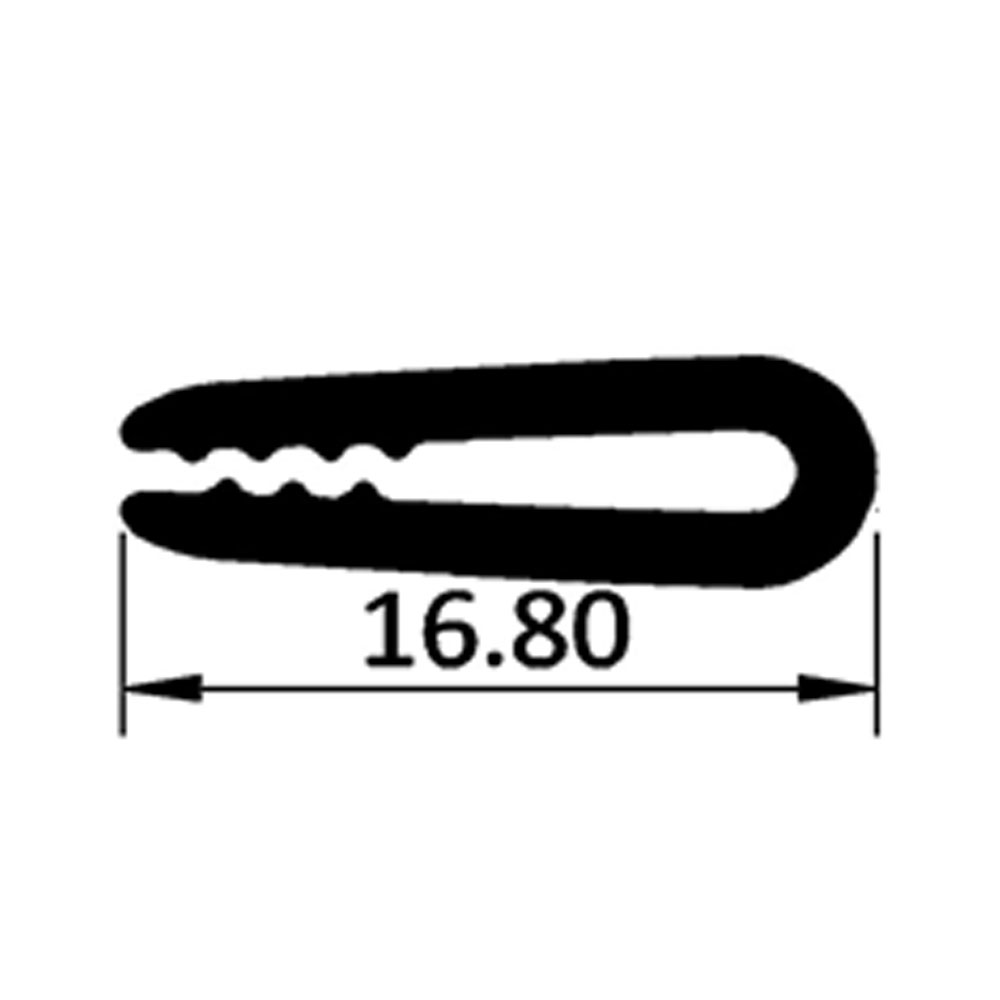
In the industry, the cold room door leaf u rubber is also commonly referred to as “U sheet rubber.” This name originates from:
- Its U-shaped geometry
- Its design to fit securely onto metal sheet edges
U sheet rubber is widely preferred by door manufacturers due to its practicality, reliability, and long-term performance.
Advantages in Door Leaf Manufacturing
The BOB-P571 provides several advantages during door leaf production:
- Fast and easy installation
- Compatibility with standard aluminum profiles
- No additional processing required
- Long service life
- Direct contribution to energy efficiency
These advantages make it suitable for both mass production and custom cold room door projects.
Contribution to Energy Efficiency
Energy consumption is one of the largest operating costs in cold storage facilities. Proper insulation inside the door leaf:
- Reduces cold air leakage
- Lowers refrigeration system workload
- Decreases electricity consumption
The cold room door leaf u rubber (BOB-P571) may be a small component, but it delivers a significant impact on overall energy efficiency.
Application Areas
The BOB-P571 cold room door leaf u rubber is widely used in:
- Industrial cold storage doors
- Cold room hinged doors
- Cold room sliding and monorail doors
- Automatic sliding cold room doors
- Door leaf manufacturing facilities
Technical Specifications
- Product Name: cold room door leaf u rubber
- Alternative Name: U Sheet Rubber
- Manufacturer: Bob Modüler
- Product Code: BOB-P571
- Function: Aluminum profile – metal sheet insulation
- Compatible Profiles: BOB-7006D, BOB-7006C, BOB-30561, BOB-30557, BOB-12865
- Application Area: Cold room door leaf
Conclusion
The cold room door leaf u rubber (BOB-P571) is a high-value auxiliary component designed to ensure the correct, efficient, and long-lasting production of cold storage door leaves. By interrupting the direct contact between aluminum profiles and metal sheets, it effectively prevents heat transfer, enhances thermal insulation, and supports energy efficiency. Thanks to its compatibility with multiple door types and widely used aluminum profiles, it is a reliable and essential solution for modern cold room door manufacturing.