Description
PVC Frame Profiles
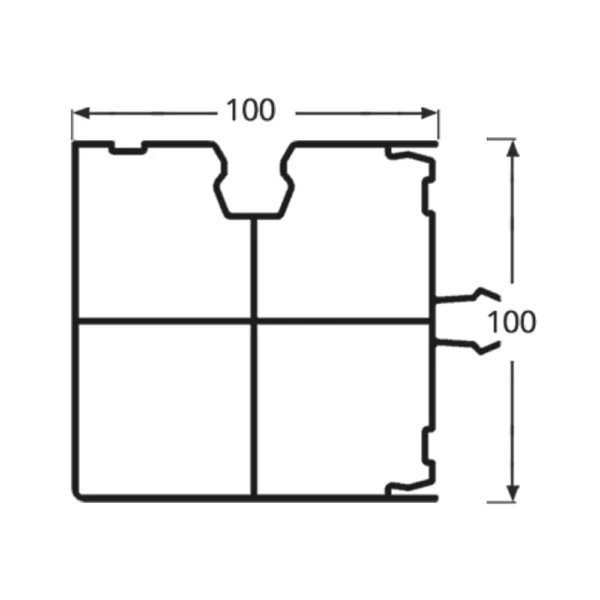
Heater-Free Frame Concept with Gasket-Integrated Heating
In cold room door systems, heater cables are used to prevent freezing, icing, and gasket adhesion, especially in low-temperature environments. Heater cable application is generally carried out in two ways:
- Inside a dedicated heater channel integrated into the frame profile
- Inside the cold room door gasket
BOB-10147 is designed for the second method, meaning the frame profile itself does not include a heater cable channel. Instead, the heating cable is installed directly inside the specially designed door gasket.
This system provides several advantages:
- A cleaner and simpler frame geometry
- Heat is delivered directly to the sealing line
- Reduced thermal bridging through the frame
- Easier design standardization for modular frame systems
Advantages of PVC Frame Profiles in Cold Room Doors
PVC is one of the most widely used materials in cold room door frame production due to its technical and hygienic benefits:
- Low thermal conductivity reduces heat transfer and thermal bridges
- High resistance to moisture, condensation, and corrosion
- Smooth and hygienic surface suitable for food-grade environments
- Easy to cut, weld, and assemble
- Long service life with minimal maintenance
BOB-10147 PVC Frame Profile combines these advantages with a modular system that adapts easily to different wall panel thicknesses.
Modular Frame System with Extension Profiles
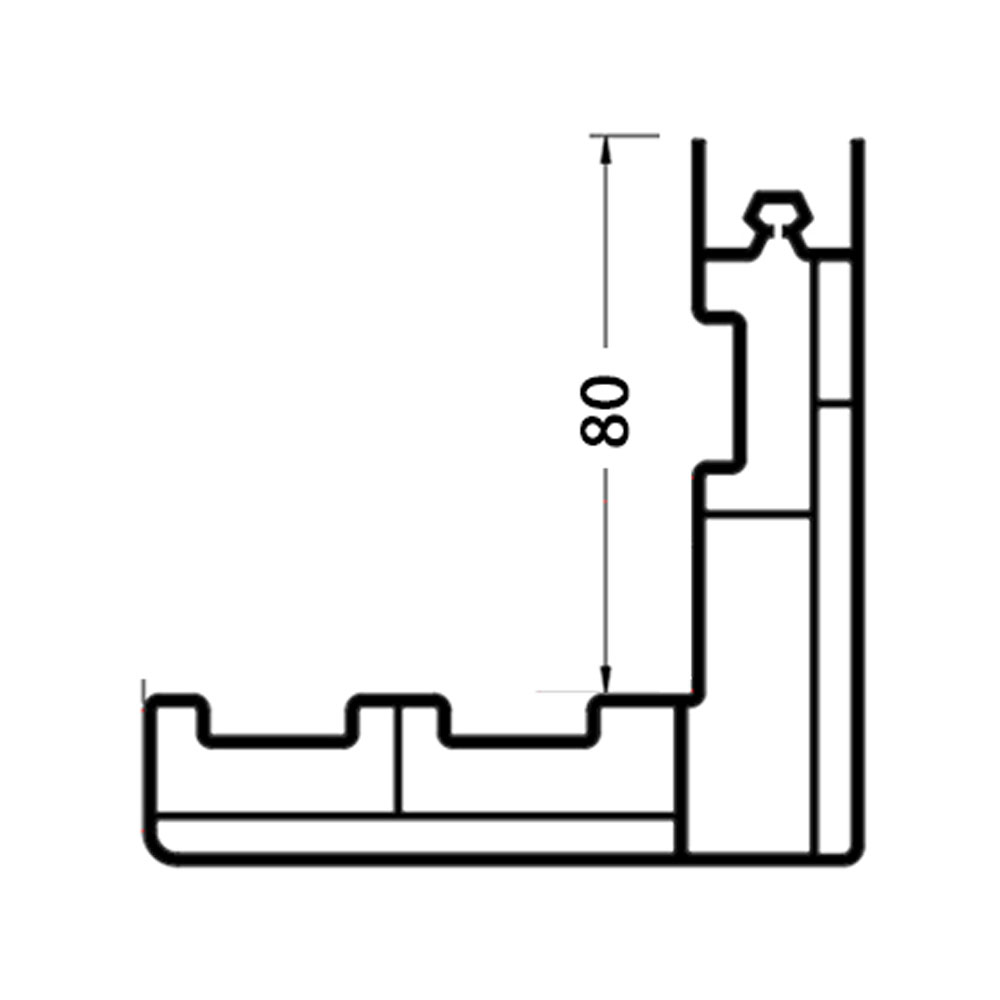
BOB-10147 is designed as a modular PVC frame system, allowing cold room door frames to be produced for various wall panel thicknesses using extension profiles.
To achieve the required cold room wall panel depth, the following extension profiles are used:
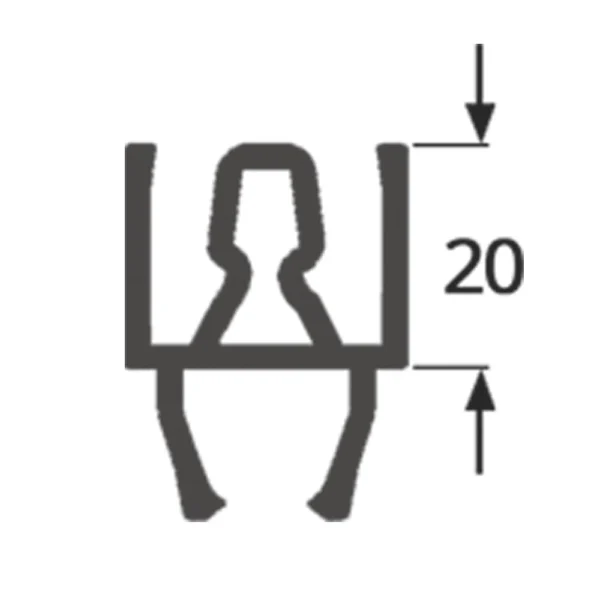
- 20 mm Extension Profile (BOB-10019)
- 30 mm Extension Profile (BOB-10092)
These extension profiles are added to the main PVC frame profile to match the exact thickness of the cold room wall panel.
How the Modular System Works
- The main PVC frame profile is used as the base component
- If the wall panel thickness exceeds the base depth, extension profiles are added
- Extension profiles are cut at 45-degree angles
- They are installed using a snap-fit (hammer-in) method, without welding
- The required depth is achieved by combining multiple extensions if necessary
This modular approach provides:
- Flexibility for different cold room panel thicknesses
- Reduced inventory complexity
- Faster production and installation
- Consistent frame geometry across different projects
Cold Room Door Frame Production Process
Cold room hinged door frames produced with BOB-10147 follow a structured and efficient manufacturing sequence.
1️⃣ Cutting the Main Frame Profile
The PVC frame profile is measured according to door dimensions and cut at 45-degree angles to ensure precise corner joints.
2️⃣ Frame Assembly
The cut profiles are assembled into a rectangular frame using either:
- PVC welding machines for maximum rigidity, or
- Mechanical joining accessories for faster assembly
3️⃣ Installation of Extension Profiles
Depending on the wall panel thickness:
- BOB-10019 (20 mm) and/or
- BOB-10092 (30 mm)
extension profiles are added to the main frame profile using the snap-fit method. Welding is not required at this stage.
4️⃣ Rear Cover Profile Installation
After the extension profiles are in place, the rear cover profile is prepared:
- It is cut at 45-degree angles
- Welded into a rectangular shape
- Installed onto the extension profiles using a snap-fit method
At this stage, the cold room door frame structure is fully completed.
Heating Cable Application Inside the Door Gasket
In BOB-10147 frame systems, the heating cable is installed inside the cold room door gasket, not inside the frame profile.
This method ensures:
- Heat is applied exactly where freezing occurs
- The gasket remains flexible and functional
- The door opens and closes smoothly
- Ice formation and gasket adhesion are prevented
This approach is especially preferred in systems requiring a clean frame design and direct thermal control at the sealing line.
Energy Efficiency and Airtightness
The modular design and gasket-integrated heating method ensure high energy efficiency:
- Tight contact between door leaf and frame
- No air gaps along the sealing perimeter
- Reduced cold air leakage
- Lower energy consumption in cold storage facilities
Areas of Application
BOB-10147 PVC Frame Profile is widely used in:
- Cold room hinged doors
- Industrial cold storage facilities
- Food processing and storage plants
- Logistics and distribution centers
- Cold rooms requiring modular wall panel compatibility
Technical Specifications
- Product Name: PVC Frame Profile
- Manufacturer: Bob Modüler
- Product Code: BOB-10147
- Material: PVC
- Heater Channel: Not available on frame
- Heating Method: Inside the door gasket
- Extension Profiles:
- 20 mm (BOB-10019)
- 30 mm (BOB-10092)
- Structure: Modular frame system
- Application: Cold room hinged door frames
Conclusion
The PVC Frame Profile (BOB-10147) is a professional, modular solution designed for cold room hinged doors where the heating cable is applied inside the door gasket. Its PVC construction, compatibility with 20 mm and 30 mm extension profiles, and clean heater-free frame geometry make it a reliable and energy-efficient choice for modern cold storage projects. Backed by Bob Modüler’s engineering expertise, BOB-10147 offers flexibility, durability, and consistent performance across a wide range of cold room applications.